
Frans Vermee GmbH
Two-Component Systems: Filling Lines for Adhesives, Sealants & Pasty Compounds
Two-component systems have become an integral part of the packaging and filling industry. They offer a reliable and effective solution for the precise dosing of liquids and pasty masses such as epoxy resin adhesives, polyurethane sealants, silicone sealants, filling and filling compounds, potting compounds and coating systems and enable fast and automatic filling of complex products. The mixing ratios can be individually adjusted according to requirements and application.
Efficient production
Reliable 2-Component Filling Lines with High System Availability
Unlike many other suppliers, Frans Vermee GmbH can guarantee high quality and reliable availability of two-component systems for the packaging and filling industry.


Optimum portioning
Precise Dosing for Consistent Product Quality
An important factor when using two-component systems is the filling quantity and quality of the packaging. Precise dosing of the two components can result in a tightly or loosely filled product, depending on requirements and product properties. Precise dosing is particularly important when filling takes place in a continuous process in order to ensure uniform filling.
Whether coating compounds or hot melt
Sleeve-in-Sleeve – Filling for Epoxy Resins & Adhesives
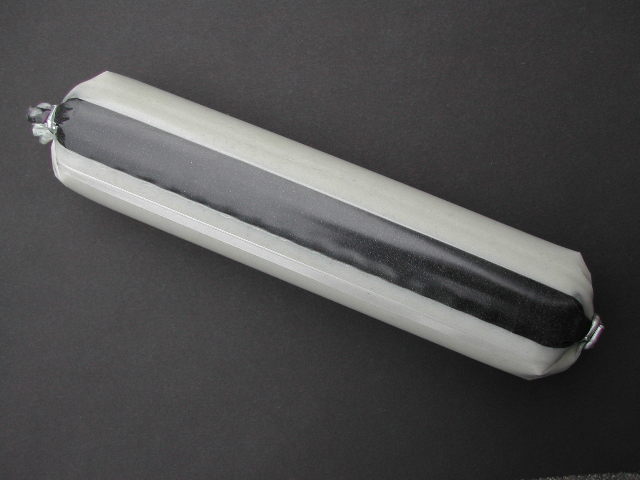
Tube-in-tube or sleeve-in-sleeve filling is a frequently used method for filling pasty compounds in two-component systems. An inner tube is inserted into an outer tube, leaving a space between the two tubes. One of the two components of the mass to be filled is poured into this space. The other component is inserted into the inner tube. During the filling process, the two components are simultaneously pressed out of the tube through the gap and fed into the container. This method is particularly suitable for pasty and viscous products such as toothpaste, creams, ointments, gel products, chocolate and caramel sauces, mayonnaise and mustard, but also epoxy resins or adhesives, where exact dosing and mixing of the components is of great importance.


Drum and big bag alternative
Adhesive Anchor Cartridges as an Alternative to Drums and Big Bags
Our systems also work in particular with so-called adhesive bonding cartridges, whose two chambers each contain an adhesive component, e.g. epoxy resin and hardener. The two components are mixed through a special nozzle and can then be applied to the material to be bonded. The use of glue gun cartridges enables fast and precise dosing of the adhesive components and is particularly widespread in industrial production.
Frans Vermee GmbH
SMP Booster: Higher Dosing Accuracy & Lower Material Consumption in 2K Systems
In order to achieve effective and economical filling, Frans Vermee GmbH offers the SMP booster system. This system enables higher dosing accuracy while reducing material consumption at the same time. Thanks to improved control of the dosing and the speed of the flow, smaller quantities can be dosed more accurately. This leads to lower material consumption and therefore lower costs for the user as well as a reduction in environmental pollution.

Frans Vermee GmbH
Safe Filling of Chemical-Water Mixtures
Mixtures of chemicals and water can present a challenge for packaging in two-component systems, as they often require compliance with special regulations to ensure safe handling and storage. It may be necessary to use special materials or coatings to avoid chemical reaction or contamination of the liquid. Precise dosing of the two components is also very important to achieve uniform filling. Frans Vermee GmbH meets the requirements of such sensitive products by using flat films and tubular bags, which are characterized by particularly high impermeability. Our systems and processes meet the legal requirements and therefore enable you to fill two-component products safely and in accordance with regulations.
Hygienic, Precise & Food-Compliant
Two-Component Packaging for the Food Industry
Two-component filling is no longer limited to adhesives. Two-component systems also offer significant advantages in food production—Vermee systems are designed specifically to meet these requirements.
Typical applications:
- Chocolate products: Ganache core (inside) with chocolate shell (outside)—filled in a single filling step
- Sauces & dressings: Oil base and seasoning components are mixed only upon opening—longer shelf life, fresher aroma
- Dairy products: e.g., two-layer yogurts or desserts with fruit and cream layers
- Confectionery & baked goods: cream fillings combined with fruit layers or caramel
All Vermee systems used for food applications comply with the applicable requirements for food contact materials.


Two-Component Systems by Vermee
Precise Core-Shell Technology for High Efficiency in Production
In the co-extrusion process, both components are fed through a co-extrusion die simultaneously. The result is a continuous product strand with a defined core and shell—for example, a jam core encased in a quark shell.
The 2K extrusion process offers a fully integrated solution: Since both components are fed through the co-extrusion die in a single step, a separate filling process is completely eliminated—this simplifies the system and reduces maintenance requirements. Throughout the entire length of the product strand, the process ensures uniform distribution of the core and shell. The result is a consistent product appearance that meets the highest quality standards—for every single piece. With production speeds of up to 50 parts per minute, 2K extrusion enables cost-effective operation even at high throughput. Even with varying viscosities of the components used, the core-sheath ratio remains stable and reproducible—a decisive advantage for consistent formulations and reliable product specifications.
Precisely Separated Until the Moment of Application
Two-Component Reactive Adhesives
Two-component adhesives place special demands on dispensing technology: Both components react upon contact—the pot life is limited. Premature mixing before dispensing results in material loss and, in the worst case, machine downtime.
Vermee systems are designed to keep the resin and hardener completely separate until dispensing and to combine them only in the nozzle or cartridge.
Typical adhesive systems:
- 2-component epoxy resin (EP) – e.g., for adhesive anchor cartridges in the construction industry (CHEMOFAST system)
- 2-component polyurethane (PUR) – flexible sealants and adhesives for industry and trade
- 2-component methacrylate (MMA) – high-performance adhesives for metal and plastic joints
Frequently Asked Questions About Two-Component Systems
What is a two-component system in packaging technology?
A 2K system is a filling and packaging solution for products consisting of two separate substances that only react with each other shortly before or during application. The components are filled and dosed separately to prevent premature reaction.
What mixing ratios are possible?
The mixing ratios are individually configurable and adapted to the respective product and application requirements. Common ratios are 1:1, 1:3, 1:4 or 1:10.
What is the tube-in-tube method?
In the tube-in-tube filling method, an inner tube is inserted into an outer tube. Each tube contains one component. During filling, both substances are pressed simultaneously and separately into the container.
What is the SMP Booster System?
The SMP Booster System is a proprietary development for improving dosing accuracy while simultaneously reducing material consumption. Optimised control enables precise filling even of small quantities.
How can I request advice?
Simply contact our team. We analyse your requirements and develop the optimal solution together with you.
How is it prevented that resin and hardener mix?
At Vermee, resin and hardener are kept completely separate from start to finish. Each component travels its own isolated path. They only come into contact during application, when the user uses the 2K product.
What is the difference between a tubular bag and a hard cartridge?
The tubular bag is the more economical and flexible solution: The film packaging is cheaper to manufacture, significantly lighter and saves considerable storage space. The hard cartridge is more pressure-resistant and suitable for aggressive media – but comes with higher costs, more weight and greater storage effort.
Vermee systems are specialised in the tubular bag – and that is exactly where the strength lies: efficient, cost-effective and practical.